India’s Tough Stand Shakes COP30 Preparations: Why the Global South Is Rallying Behind New Delhi
By Qamar Farooqui | International Desk
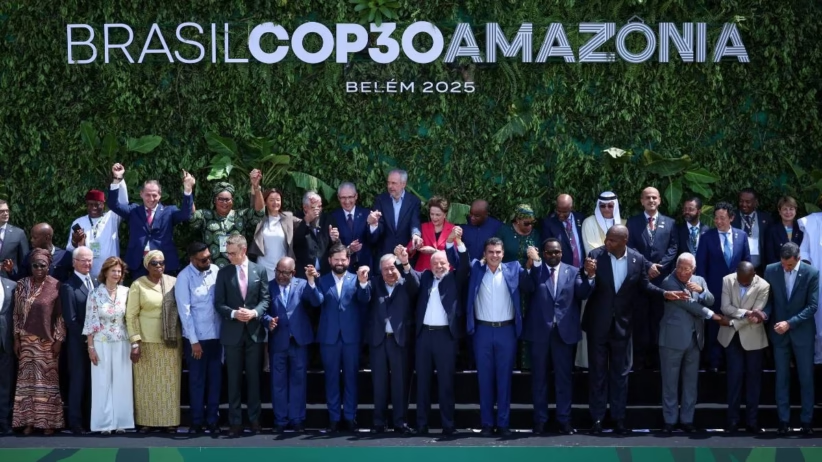
Brasília, 26 November 2025 – India has taken a firm stand at the COP30 preparatory meeting in Brazil, outright rejecting a fresh demand from developed nations for an additional $1 trillion annual climate funding package by 2030. Environment Minister Bhupender Yadav made it clear: “Rich nations must first pay for their historical emissions before asking developing countries to shoulder new burdens.”
What Happened at the Prep Meet?
- A group of developed countries (led by the EU and US) proposed replacing the existing $100 billion annual pledge with a $1 trillion “New Collective Quantified Goal” (NCQG).
- India, backed by the Like-Minded Developing Countries (LMDC) bloc, China, and the African Group, called the proposal “unrealistic and unfair”.
- India’s official statement: “The Global North is responsible for 79% of historical emissions. They must deliver on existing promises before demanding new ones.”
Key Indian Demands
- Full delivery of the pending $100 billion per year (only $83 billion delivered so far).
- At least 50% of all climate finance must be grants, not loans.
- Technology transfer without patent barriers.
- Separate funding track for loss and damage (already agreed at COP27 but not funded).
Why This Matters for India
- India faces $85 billion annual climate adaptation costs by 2030 (World Bank estimate).
- States like Bihar, Assam, and Odisha suffer recurring floods costing thousands of crores yearly.
- India’s per-capita emissions remain among the lowest globally (1.9 tonnes vs USA’s 15 tonnes).
Global Reaction
- African Group and Small Island Nations supported India’s position.
- EU negotiators called India’s stance “hardline but justified”.
- US delegation reportedly walked out of a closed-door session after the proposal was blocked.
The final COP30 summit begins next week in Belém, Brazil. Analysts say India’s tough stance has strengthened the Global South’s bargaining power ahead of the crucial talks.
What do you think – should rich nations pay more for historical emissions? Comment below!