Johannesburg Summit Ends with an Empty Chair: How the US Boycott Unfolded
By Qamar Farooqui | International Desk
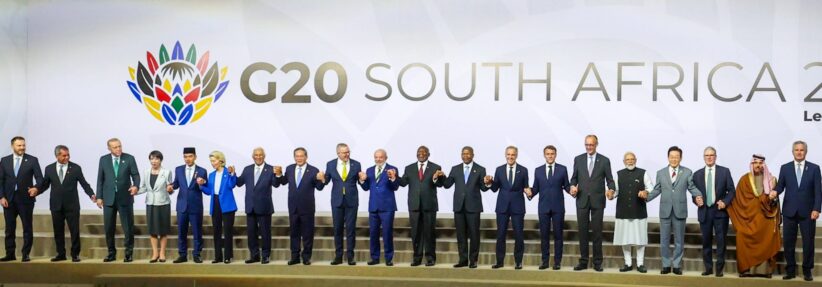
November 24, 2025 | Johannesburg, South Africa. The curtains fell on Africa’s inaugural G20 Leaders’ Summit in Johannesburg on Sunday with a symbolic bang of the gavel from South African President Cyril Ramaphosa, but the absence of the United States cast a long shadow over what was meant to be a milestone for the Global South. In a stunning diplomatic snub, the Trump administration boycotted the two-day event, citing unfounded claims of “racist anti-white policies” and persecution of Afrikaner farmers in South Africa—a narrative widely discredited by fact-checkers and international observers. The boycott not only upended traditions like the ceremonial handover of the G20 presidency to the U.S. but also forced the adoption of a leaders’ declaration at the summit’s outset, bypassing U.S. input and drawing sharp rebukes from Washington.
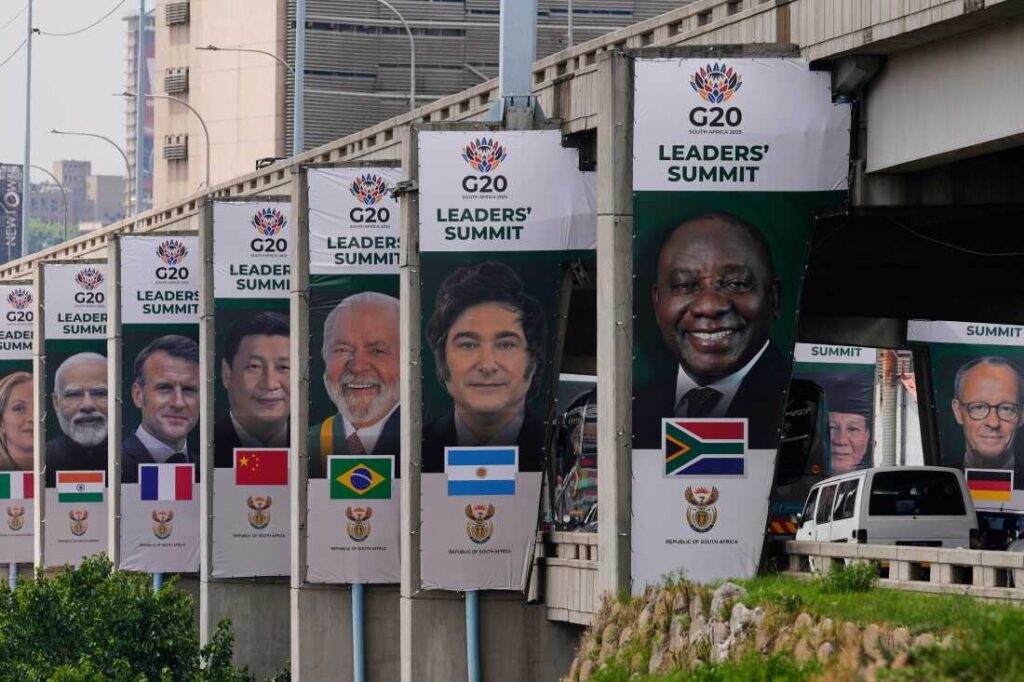
Hosted at the Nasrec Expo Centre, the summit brought together leaders from 19 major economies, the EU, and the African Union to tackle pressing issues like climate finance, inequality, and trade reforms. Yet, the U.S. absence—echoing earlier skips by Secretary of State Marco Rubio at preparatory meetings—dominated headlines, with Ramaphosa rejecting a last-minute White House proposal to pass the gavel to a junior embassy official, opting instead for an “empty chair” symbolizing the void. White House spokesperson Anna Kelly decried the move as “refusing a smooth transition,” accusing Pretoria of “weaponizing” the presidency to undermine G20 principles.
The Boycott’s Backdrop: False Claims and Fractured Alliances
The rift traces back to months of escalating tensions. President Trump, in a May 2025 White House meeting with Ramaphosa, repeatedly amplified debunked narratives of a “white genocide” in South Africa, brushing aside the host’s corrections. By February, Rubio had lambasted the summit’s “Solidarity, Equality, Sustainability” slogan as overly focused on diversity, equity, inclusion (DEI), and climate change—priorities South Africa championed to amplify African voices.
The boycott extended beyond leaders: No senior U.S. delegation attended, leaving the event without the world’s largest economy. Other absences compounded the drama—Russia’s Vladimir Putin (facing ICC warrants, as South Africa is a signatory), China’s Xi Jinping, and Mexico’s Claudia Sheinbaum—yet the U.S. void was the most glaring. Protests in Soweto, with demonstrators donning oversized leader masks, underscored the irony: A summit for the marginalized, boycotted by the powerful.
Despite the chaos, the G20 forged ahead. Leaders adopted a declaration early on Saturday—unusually at the start—emphasizing climate action for developing nations, debt relief, and reforms to global institutions like the IMF. UN Secretary-General António Guterres praised South Africa’s role in “putting these issues on the table,” while European Commission President Ursula von der Leyen hailed it as a “triumph for multilateralism.” French President Emmanuel Macron, in post-session remarks, stressed the need for “meaningful reforms” prioritizing the Global South.
Global Repercussions: From Trade Turmoil to Legitimacy Crisis
The spat’s fallout is seismic. G20 declarations, though non-binding, guide $80 trillion in annual global GDP. The U.S. boycott risks eroding the group’s efficacy on flashpoints like the Russia-Ukraine war and Middle East tensions, where American leverage is pivotal. Markets reacted mildly—global stocks dipped 0.5% on Monday amid uncertainty—but analysts warn of longer-term cracks in supply chains and finance flows.
For the 8 billion people worldwide, this underscores a multipolar shift: The G20, born from the 1999 Asian financial crisis, now grapples with U.S. isolationism clashing against rising powers like India and Brazil. South Africa’s push for African Union inclusion (added in 2023) amplified calls for equitable climate funding—$100 billion annually pledged but undelivered—yet Trump’s DEI critique alienated allies.
India’s Balancing Act: Emerging as a Bridge in a Fractured Forum
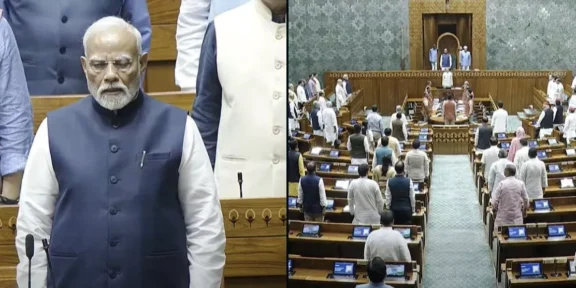
India, under Prime Minister Narendra Modi, navigated the turmoil with characteristic pragmatism, positioning itself as a mediator in a divided G20. Modi attended virtually (citing domestic commitments), engaging bilaterally with Ramaphosa, Brazil’s Lula da Silva, and Australia’s Anthony Albanese on trade and climate. New Delhi’s abstention from U.S.-led condemnations of Russia and its BRICS leadership (with South Africa) allowed it to champion Global South priorities without alienating Washington.
The stakes for India are high: As the world’s fifth-largest economy, it relies on G20 forums for $1 trillion in annual exports and climate adaptation funds to combat monsoons devastating Bihar and Uttar Pradesh. External Affairs Minister S. Jaishankar, in a pre-summit tweet, urged “restraint and reform,” echoing Modi’s G20 Delhi Declaration legacy of “One Earth, One Family.” With the U.S. set to host in 2026, India’s “multi-alignment” diplomacy—bolstering QUAD ties while deepening BRICS—could broker reconciliation, safeguarding $500 billion in Indo-U.S. trade.
Yet, risks abound: A weakened G20 might embolden unilateralism, complicating India’s WTO ambitions and Indo-Pacific security. Diaspora communities—over 2 million Indian-origin South Africans—also watched anxiously, with New Delhi facilitating 200 evacuations amid protest tensions.
Conclusion: A Gavel Bang for Multilateralism, or Prelude to Fragmentation?
Ramaphosa’s gavel strike closed the summit on a defiant note, but the U.S. boycott exposes fault lines in a post-Trump world order. As Guterres noted, “South Africa has done its part”—yet without American buy-in, the G20’s legitimacy hangs in the balance. For billions in the developing world, the real test lies ahead: Can forums like this deliver on inequality and climate, or will boycotts breed isolation?
India, with its non-aligned ethos, stands ready to bridge divides. As Modi often says, “Vasudhaiva Kutumbakam”—the world is one family. In Johannesburg’s shadow, that family feels more fractured than ever.
Qamar Farooqui is Editor-in-Chief at News360. Follow for global affairs through an Indian lens. Share your thoughts: Does the U.S. boycott weaken the G20? Comment below.
Source: Media